About us

Twenty + Six is a couples blog. She is Georgina Marmoy, he is Joshua Smith. We began this blog as a starting point to help us raise money for NACC as the charity helps people who suffer from illnesses which we both have.

We are currently travelling around South America, documenting our stories and snaps for your viewing pleasure!

Tuesday, 8 April 2014

Sucre & Round Two of La Paz

Sucre & La Paz, Bolivia

From the mines we were happy to move on to Bolivia's former capital city, Sucre. We found that it didn't have too much to offer, but was a welcome rest. We visited the cathedral and adjoining museum, which left us a little freaked out with lots of statues of religious figures that seemed to stare at us anywhere that we went. 

Sucre gave us a chance to catch up on sleep, before heading back to La Paz to begin our journey out of Bolivia and onto Peru. The only thing in La Paz we had left to do was 'The worlds most dangerous road' but hearing of someone we met breaking their collarbone cycling the road just as we arrived to La Paz, we opted to visit Tiwanaku, a pre-Inka site, instead.

Heading straight off an all-night bus and onto another one to visit Tiwanaku, we tried to stay awake to take in all the information our tour guide gave us. Tiwanku was a pre-Inka site that is still being discovered and was a small town that inhabited lots of farmers. Over 60% of the information has been lost about the site, but the visit got is excited about our visit to Macchu Pichu! The Inkas had beliefs similar to the Egyptains regarding the after-life and we saw the process of mummification and beheading. 

After the tour and hearing about 'the highest Indian restaurant in the world', we decided to head to The Star of India for dinner. Ordering a Tandoori and Korma, I'm afraid to say we were disappointed and were not impressed with the quality of the food, especially with the craving of a homemade curry back home! This led to an early night before heading to Puno, Peru in the morning and heading to Lake Titikaka for a home stay with a family on the Armintani Island. 


Wednesday, 26 March 2014

The Mines of Potosi

Potosi, Bolivia

Potosi, the self proclaimed "highest city in the world", was just a short bus journey on from Uyuni. After our trip to see the Salt Flats we thought we had started to acclimatise and felt much more confident of dealing with being so high up. But the altitude came and slapped us in the face again.
Unable to do much more than grab a quick dinner of fried chicken (which is hugely popular here in Bolivia, by the way) we made straight for our hostel to rest up.
The hostel we chose, Juan Carlos V, was another fine choice. We had some difficulty aquiring a room to begin with, as we only speak "un poco de español" and our new landlord spoke even less English, but after a lot of gesturing and some fine translation from one of the other guests we were all booked in for the night.
After dumping our bags in our room we made for the rooftop terrace which gave a beautiful view of the city and many mountains surrounding it. It's astonishing to think that so many people could find their way to and live so happily tucked away in those mountains.
The next day there was only one thing on my mind - go to see the mines. Potosi is famous for it's mines, which produce silver and zinc among other natural resources and caused something of a silver rush amoung Europeans in the 1500s. Georgie, though, was understandably nervous about heading in. We decided to book with a company called Real Deal Tours after being recommended them by a friend we met on our Salt Flats expedition. She had also been nervous about being in the confined space but had assured us that she hadn't felt too scared on this tour.
So we handed our money over and waited to depart.
First up we went to a local market as it is the custom to buy presents for any miners you encounter whilst trawling through the mines. Common items to pick from include drinks (mining is thirsty work), Coca Leaves (miners love to chew on these as they work away) and dynamite (apparently quite useful in the mining industry). We went with drinks and coca leaves.
We then got kitted out in waterproof over layers, breathing masks and miners helmets and made our way to the mines.
They were so interesting, both in how vast they have become (the sheer manpower it will have taken to carve these labyrinths in to the mountains is crazy!) and in seeing how these people earn their livings. Our tour guide Efrain told us that his father had worked down the mines for 70 years and out of those that we bumped in to this number ranged from 12 to 40 odd. To try and add a little perspective to that, we came out with heavy lungs from all the dust and debris from spending barely 2 hours inside and we had worn masks.
Now these mines aren't exactly Moria but they are pretty scary in parts. The worst of which came when we had to scale three flights of ladders in quick succession, I didn't dare look down. Oh and once we'd done this we came face to face with the devil, or 'Teo' as the locals call him. It is their belief that he owns all of the minerals in the mountains and as such they have built a statue of and regularly pay homage to him, offering llama blood, coca leaves and alcohol as marks of respect.The interesting part about the alcohol is that it is 96%, this is because the miners believe that by drinking the purest alcohol possible, Teo will reward them with pure Silver and not a mixture of elements that then need refining.
You can also add to this frightfulness the nightmare of nightmares - I dropped the first memory card we used in our camera somewhere in the mine. I'm so annoyed that we've lost 150 odd images from our first few days in Rio, but hey, at least we didn't run in to a Balrog!
 

Tuesday, 25 March 2014

Beginning Bolivia


La Paz & Salar de Uyuni, Bolivia

After 3 flights, a 6 hour layover, 2 slices of pizza and 2 milkshakes we made it to our second country- Bolivia. The first thing that hit us landing in La Paz was the altitude. Not being able to take more than a few steps without needing to take a breather was a challenge, especially after a long day of flights and with big backpacks.

Luckily we checked in to a lovely hostel in La Paz 'Arthy's Guesthouse' which had rooms built around a central courtyard and a kitchen for us to make a quick dinner before heading to bed. 

We are travelling Bolivia by bus so most places we only see for one or two days. Our first stop. La Paz. Still feeling the altitude on our first day in Bolivia, we visited the markets - something we were told La Paz is famous for. These are dotted all over the city, with various items for sale - vegetables (avacados the size of my head), lightbulbs, football shirts and so much more. With a maze of different things for sale, we also wanted to have a look at the 'Witches Market', which was supposed to offer up some unusual items.

Meandering through various side streets, we found the Witches Market and before we knew it came face to face with dead dried llamas. This came as a little shock at first, but we later found out that they are llama fetuses, that are buried outside houses as a form of protection from evil sprits. Various other unusual items were also found as we walked cautiously through the market such as dried bird beaks and crushed bugs, all said to be used as natural remedies and cures. We decided to just stuck to paracedomal for the time being.

After a short stop in La Paz, we headed on to an overnight bus to Uyuni, this was where we went on a tour to do our main activity in Bolivia - the Salt Flats (or Salar de Uyuni to the native tongue)! Uyuni is a very small and dusty town with not much going but we managed to eat well, rest up and get ready for our tour. 

We went on a 3 day jeep tour with Red Planet Tours, who we would highly recommend. The first day we drove across the salt flats which was an incredible experience. The Salt Flats themselves are almost as big as Northern Ireland and it looked like smooth snow for miles. After the obligatory perspective photo shoot on the salt flats we visited Fish Island, where an island of cacti had grown over hundreds of years in the middle of the salt flats. This was enough for the first day as we stayed in a basic hostel in the middle of nowhere. We had a chance to get to know the people in our jeep (particularly our Bolivian tour guide Juan who told us all about life as a llama farmer) and enjoy some delicious Bolivian dinner before bed.

The next day begun by a trip to the lake to see the Flamingos who lived in the middle of the salt flats and we also saw the Red Lake where the water had been coloured by the materials from the nearby mountains. We were then taken to the Sol de Mañana Geyser - where we saw hot bubbling mud coming out from the ground at over 200C. The day ended perfectly with dinner and the chance to bathe in the natural thermal springs on top of the mountains and look out at the stars for hours. We were told this is one of the best places in the world for star gazing, being so high up there is very little light pollution and the air is so thin.

The final day we stopped off at the Salvador Dahli desert- somewhere that supposedly inspired Dahli's works and the rock tree that had formed through wind to look like a tree before heading back to Uyuni town amazed by the different sights.


Tuesday, 18 March 2014

Rio Roundup

Rio de Janeiro, Brazil

We've found it helpful reading other blogs for advice whilst in Rio, it's helped us to holiday on a budget, pick out the best places to go as well as pick up little tips and tricks along the way so we thought we'd do our own roundup for anyone thinking of coming to Rio de Janiero (you should.. It's amazing!)

Transport
Getting around Rio is super easy - at first we were scared to dive in to public transport and preferred to get taxis around. How foolish we were. For R$3 you can hop on a bus to anywhere in the city and the metro is only slightly more expensive. All routes can be found on the bus stops around the town. The metro costs R$3.25 for a one way journey, but is good for journeys when you're venturing further out.

Accommodation
The only accommodation we used was Airbnb and we found this to be brilliant. Our host Jaqueline was great - providing us with that extra bit of local knowledge that can be so useful on many occasions. Where we stayed in Copacabana we spotted a few hostels, but if you plan to go at carnival times, booking hostels way in advance or Airbnb is your best and cheapest bet.

Days out 
One thing is sure about visiting Rio - you won't get bored! With so much to see and do it would be easy to get worn out from sightseeing. But that's  the great thing, if you're feeling a little bit burnt out you can just throw in a beach day and recharge!
A tip for Sugarloaf mountain is that you can trek up the first peak in around 30 minutes and after 7pm a cablecar ticket back down is free! 

I don't think that either of us were ready for just how sad we were to leave Rio. The city is beautiful, the people friendly and the experience, for us, was just so special.

Now for we embark upon the second chapter of our trip... next stop Bolivia!

Must sees in Rio de Janeiro:
The view from the top of Sugar Loaf mountain - go at sunset and watch the city come alive
Escalaria Selaron - splashed with Samba colour and free to go to!
Ipanema beach - enjoy a coconut water and watch the locals play volleyball or football
Jardim Botanico - don't feed the monkeys!


Sunday, 16 March 2014

Eating cheaply in Rio de Janeiro

Rio de Janeiro, Brazil

Since we're travelling on a pretty tight budget we thought we'd post a blog to show fellow travellers a good way we've found to eat on the cheap in Rio de Janeiro.

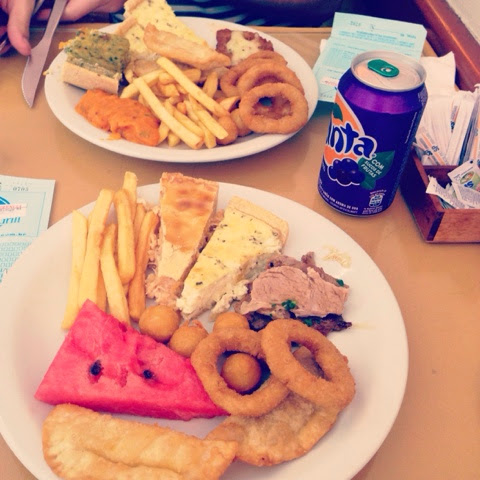
There is a brilliant type of restaurant here called 'A Quilo' which are buffets where you are charged by the weight of food on your plate. The prices and standard of food on offer vary hugely, as you might expect, but we have found some cheaper ones we have been very happy with.

One of these is a place called Express Grill just off of the Copacabana beach which charges R$3.99 per 100g between 11:00 - 12:15 and as a result we've found ourselves in there stocking up on some brunch relatively often.

The food you can expect to see on offer are salads (be careful as these will often be washed with tap water), grilled meats such as chicken & white fish, flavoured & plain rices, mashed potato, chips and boiled veg. Many also have authentic Brazilian fare such as Feijoda (a black bean stew), Bobo de camarao (a shrimp based stew) and Salgado (various types of finger food), plus many more dishes to try! Lots of these restaurants also offer sushi or grilled meat to order (known locally as Churrasco), but these can cost extra so we have avoided them so far. You also have to pay extra for dessert but again these are done on a pay by weight basis and often include cakes, ice creams and gateaux. Another nice touch that we've found at many of the places we've been is that they offer a free Brazilian tea, coffee or hot chocolate at the end of your meal.

Other favourites of ours include Aipo Aipim, Estacao Sabor and Temperarte all of which are located around Copacabana beach.

The important thing to remember here is that this is not gourmet gastronomy and if you're looking to save a few pennies for other things later in your trip you can't be too fussy. With that in mind we've found that paying around £3 -£4 each for our main meal of the day is pretty good going considering the amount we get to put in our bellies for that price. Now you can't really argue with that, can you?

Tips:
All of these places offer a takeaway option for the same price as dining in.
For very hungry customers there will normally be an all you can eat option.
For money savers, some will have certain times to eat that are cheaper.
Avoid extras like cooked to order meats and sushi to keep costs down.
Before going for dessert, be aware most places include fresh fruit as part of the main buffet.


Friday, 14 March 2014

Rio de Janeiro beaches

Rio de Janeiro, Brazil

With Rio de Janeiro located right on the seafront, it has many beautiful beaches to visit. 

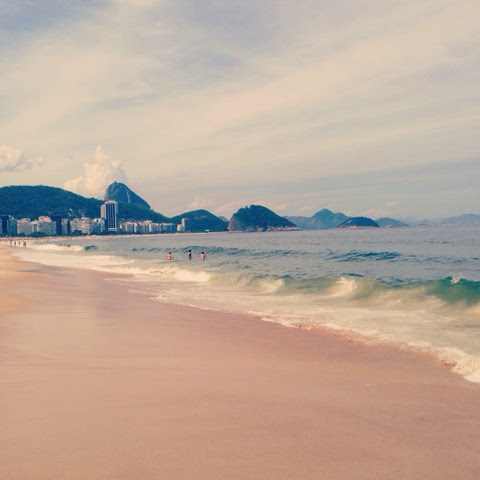
Copacabana and Ipanema beaches are the ones we visited. Copacabana beach stretches around 2.5 miles and is a fairly busy beach all year round. The beach is extremely busy at carnival time, as is most of the city. Copacabana is probably a better beach for families, the sand isn't hilly so you have a good view of the sea from lying down and you have a lovely mix of skyscapers and mountains as the backdrop to the sea. The sea tends to be quite sandy until you go out a little deeper and be warned to not set up camp for the day too near the sea as the tide tends to come right in late afternoon, where we saw many towels and picnics ruined. Copacabana beach has many lovely beach bars serving grilled meats and seafood on hot dishes as well as cocktails and beers if you are just after a drink. There is also a whole array of shops and restaurants in the road behind the beach, so you are never far from something to eat or drink - of course there are always sellers on the beaches that will be happy to serve you.

Both beaches will have on sellers trying to entice you with treats. What they sell varies from drinks to jewellery and sun cream to umbrellas. Everything you need on the beach, they sell. Popular in Brazil is chai ice-tea with lemonade. Sellers will have one canister filled with chai ice tea and the other with home made lemonade where you pay for a glass and decide the measurements of each yourself. Also popular are the snacks made from local companies who use people to sell on the beach. These snacks range from pastries filled with meats or cheese, sandwiches or burgers.

Other sellers will sell cans of drink and general snacks such as crisps and nuts. They will normally do deals if you are prepared to pay for more than one of what they are selling. They are also generally friendly and will take a simple no as an answer if you aren't interested.

Ipanema beach was our favourite. We found it not to be as busy and we found the sea was clear and had lots of fun waves! This beach is sectioned and reading guidebooks, we foundthat different numbered sections were frequented by different groups of people. Section 9 is meant for 'the beautiful people' - couples and confident folk lived here. Section 11 is for the gay community, which there was more on this beach than Copacabana and other sections that divided the beach but we found there was a mix of everyone everywhere and there was nothing to worry about.
The backdrop to this beach was of mountains and the beach bars didn't seem as good as Copacabana. It has more residential buildings surrounding the beach, less restaurants and less shops. But the dining on offer at Copacabana is only around 10 minutes walk away so we would often walk there for dinner.

Stepping straight on both beaches you will be asked if you want an umbrella and sun loungers. We found an umbrella to be useful in the midday sun, but if you have towels, you can save some money on seating. The umbrella will set you back around R$10 for the whole day. They have various shacks on the beach for the people that rent these out which also means throughout the day these people can fetch you drinks and various snacks if you don't want to venture off the beach and/or get something from a seller. This is useful for things like freshly made cocktails, coconut water and ice buckets for drinks. 

Tips:
On the beach sellers tend to be cheaper for drinks and snacks than bars off the beach.
On the beach sellers tend to do deals if buying one or more of their product.
It's okay to leave your things unattended on the beach - just don't take anything too valuable just in case (this is just from our own experience). 
If you can't find toilets on the beach, they are most likely in the lifeguard towers - although you will have to pay a small fee for all public toliets.
Coconut water is a cheap and delicious way to keep hydrated throughout the day and won't set you back very much money.

Copacabana beach:


Ipanema beach:


Thursday, 13 March 2014

Markets & Mountains

Rio de Janeiro, Brazil

We have had a mix of beach days with some sightseeing at the beginning of this week. The start of the week took us to a hippy market where they sold various things made of bamboo, clothes, snacks, furniture- almost anything and everything! A lot of stuff was tacky souvenirs (basically anything they could put 'RIO' on) but we came across a lovely art stall and we purchased a piece of art, so all was not lost!.. And don't worry, we picked up lots of tacky RIO key rings and bottle openers for everyone back home..

We have also taken a trip up Sugarloaf mountain, which has been one of our highlights of our stay in Rio. Sugarloaf Mountain, or 'Päo de Açúcar' in Portuguese, is two peaks that stick out into the Atlantic Ocean from Rio de Janeiro, with a cable car going between the two and amazing views of the city. Luckily, it was a clear sky and very sunny (unlike our rainy trip to Christ the Redeemer) so we were able to have some incredible views of the city. After going up the first cable car we were at the first mountain which had views of Copacabana, Flamengo and Rio harbour. The next mountain after another cable car (a nerve-racking shaky glass box with 60 or so people stuffed inside going at a fast pace) gave us some breath-taking views, with Christ the Redeemer opposite and the whole city below. We stayed until sunset and then we stayed some more until the whole city was a vision of twinkling lights. The best views of the city and one of the best parts of our trip. 

We have spent the other days on various beaches with the sand between our toes, more about the beaches on an upcoming blog

NEWS: Joshua C Smith would like to announce his decision (possibly through laziness) that he will be growing a 'travellers' beard in the next coming weeks. Yes, have no fear.. There will be progress pictures and if anyone has any tips or tricks on growing the perfect beard, send them his way!